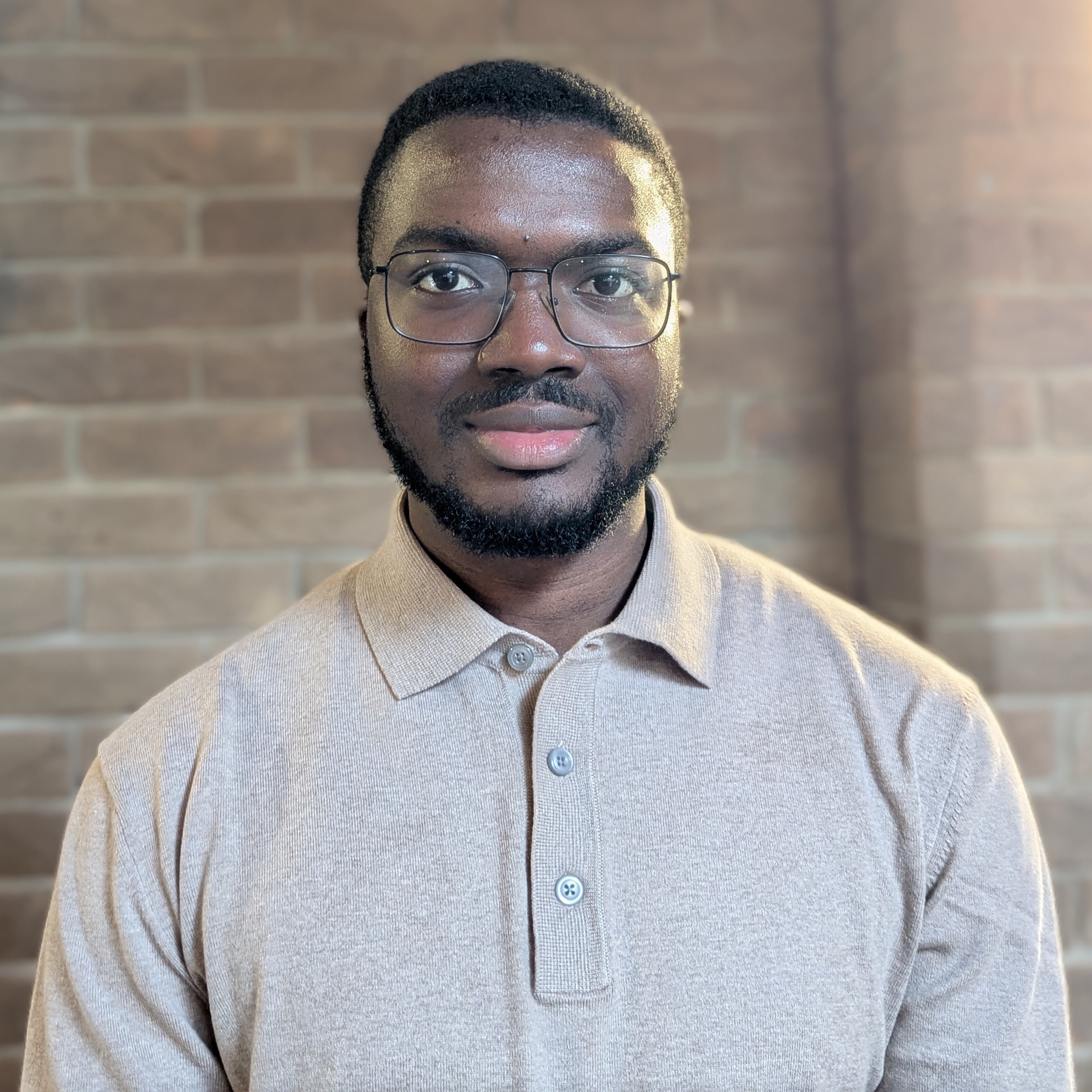
Christian Okonkwor
Specialty Trainee Doctor in General Practice
NHS Fellow in Clinical AI
Fellowship Bio
GP trainee and NHS Fellow in Clinical AI with interests in digital transformation, AI governance, ethical development, and safe implementation of AI in healthcare. Passionate about bridging clinical practice, innovation, and policy to support responsible adoption of technology across the NHS.
Fellowship Project
University Hospitals Birmingham NHS Foundation Trust
Stroke is a medical emergency where fast, accurate diagnosis can be the difference between recovery and permanent disability. We investigated an NHS-deployed tool that analyses brain scans to help clinicians identify patients who may benefit from thrombectomy, a treatment that can be transformative for the right patients. Goals: this project delivered a regional post-deployment audit of the tool, evaluating its real-world use across six NHS Trusts in the West Midlands Integrated Stroke Delivery Network. It aimed to understand staff experience of the tool, and to assess concordance between the tool’s output and the radiologist’s output with a neuroradiologist resolving conflicts. My contributions: as the NHS Fellow in Clinical AI leading the audit, I scoped the project, engaged stakeholders across all six Trusts and the ISDN, co-designed the survey and data collection methodology, coordinated data collection with radiology registrar volunteers, analysed the quantitative and qualitative findings, and wrote up and presented the results to the network. Milestones achieved: 25 clinician survey responses across five staff groups; review of 578 CT scans, with a 21% disagreement rate between the AI tool’s output and the reporting radiologist; and governance findings including two software versions in use across the network without prior awareness, and no formal MHRA safety reporting pathway, and no central clinical governance system. Recommendations have been presented to regional stakeholders to inform decisions on the tool’s future use. Still to be done: a prospective audit linking these findings to patient outcomes, disagreement resolution by the neuro-radiologist, and formal calculation of the AI’s diagnostic accuracy.
Fellowship Testimonial
The NHS Fellowship in Clinical AI has been one of the most transformative experiences of my career. I came in as a GP trainee curious about how AI could be implemented safely and responsibly in healthcare; the fellowship exceeded that expectation. The biggest lesson of the year was that successful AI deployment is rarely a purely technical challenge. Across projects spanning ophthalmology, dermatology, stroke services, AI governance, and primary care, I saw first-hand how organisational, regulatory, procurement, and cultural factors shape whether innovation reaches patients. Some projects stalled despite strong clinical enthusiasm, while others, like the RAPID-AI audit, gathered momentum. Learning to navigate both outcomes was invaluable. I most enjoyed working with multidisciplinary teams across clinical, academic, and industry settings, and engaging with national leaders in AI regulation and evaluation at conferences and workshops through the year. Leading the RAPID-AI regional audit was a particular highlight: working together with clinicians from six NHS organisations and the ISDN to evaluate a stroke AI tool’s real-world performance reinforced how much evidence generation, stakeholder engagement, and governance matter to whether AI delivers genuine benefit. As I graduate and return to General Practice, I do so with a 20% FTE capacity to continue to engage in Clinical AI activities, including working with the University of Birmingham’s Bright Group, and working towards delivering AI education to my training program’s GP residents. The fellowship has sharpened my ambition to lead digital transformation in primary care, and confirmed that responsible innovation depends on collaboration, curiosity, and persistence, qualities I will carry into whatever comes next.