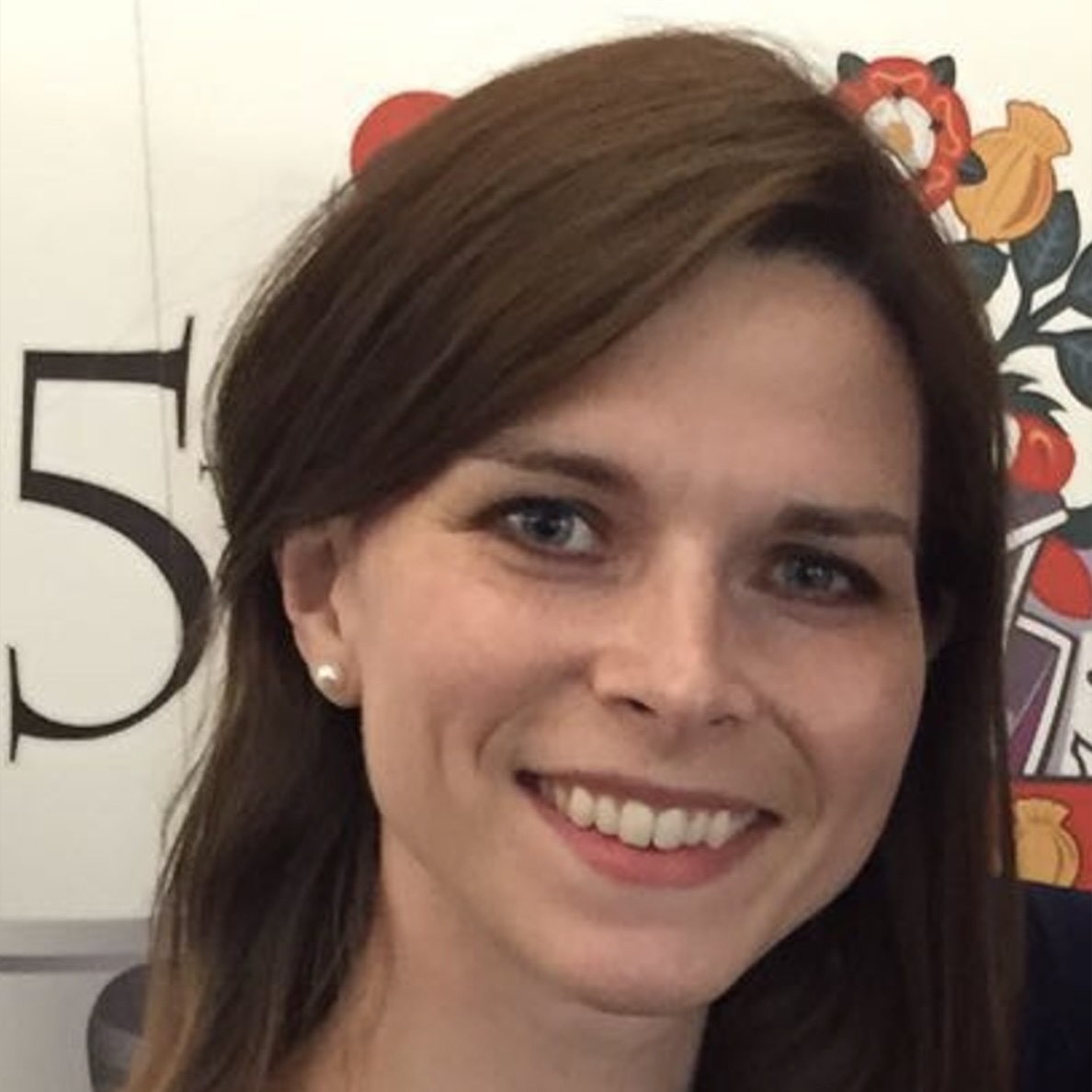
Caroline Kilduff
Specialty Trainee Doctor in Ophthalmology
NHS Fellow in Clinical AI
Fellowship Bio
I am an ophthalmologist with a strong focus on innovation, clinical workflow redesign and paediatric eyecare. I have a graphic design degree, so my work combines clinical insight with design thinking, allowing me to translate complex care pathways into efficient, user-centred solutions.
Fellowship Project
Moorfields Eye Hospital NHS Foundation Trust
Each year over 60,000 eye referrals reach London’s hospital eye services through the Single Point of Access (SPARC) service, set to rise to around 77,000 in 2027. Before a clinician reviews a referral, an administrator reads the letter, matches the patient to their NHS Spine record, and records the urgency and eye specialty needed. This takes around two and a half minutes per referral and is a growing barrier to scaling the service. Goals: We used a large language model (LLM), built into the CrossCover referral management platform, to automate these routine administrative steps, matching patients to the NHS Spine and identifying priority and subspecialty. It supports admin only, never clinical decisions. Two humans stay in the loop: the administrator who confirms its output, then the clinician who reviews the referral in the clinical worklist. My role: I co-led the project from problem definition to live use. I identified the need through time-motion studies, shadowing and staff interviews, created synthetic referrals for safe testing, and designed a staged rollout with clear stopping rules, progressing from synthetic referrals in sandbox, to synthetic in live, to live predict-only, to supervised bursts of predict-and-action in a single worklist and finally all pre-triage worklists across London. I also co-led the governance, safety and vendor work as well as engaging the SPARC team. Milestones: The AI made no incorrect patient matches at any stage, cutting admin time from 2m33s to 1m34s per referral, saving an estimated 22 weeks of full-time work yearly. Error reporting is automated for a safe and efficient service. Remaining work: The SPARC team have taken over to complete the London-wide rollout and sustain auditing. We will publish our method and dataset.
Fellowship Testimonial
The NHS Fellowship in Clinical AI has been one of the most formative years of my career. Being an NHS Fellow in Clinical AI has created opportunities and opened doors. The theory in the monthly workshops taught me how extensive the AI lifecycle is and helped me to see my area of interest within this, in implementation, usability and designing outputs to support clinical workflows. My Smart Triage project taught me to set realistic expectations for what an AI task can and can’t do and showed me that the technology is only part of the work. Just as important was the stakeholder engagement, bringing users along so they had genuine buy-in, navigating governance, designing for usability, building relationships across teams, and ensuring the output sat firmly within its intended use and regulatory parameters. The Clinical Safety Officer, UX and Usability Engineering training supported my move to my next AI role. I now feel I have the understanding to support pathway improvement (a passion of mine) and I know who to reach out to. The extended network I’ve built through the fellowship, together with the confidence that comes from being a graduate of the NHS Fellowship in Clinical AI, means I can identify the right people, ask the right questions, and move an idea forward. That combination of capability and connection will support my future career. This year has bridged the gap between my design background and my medical one. I’m entering ST6 in ophthalmology, aiming to specialise in Paediatrics and Strabismus, and alongside this, have a new AI role as Design Lead at Cascader, a medical AI company. My design background, clinical experience, and new understanding from building and safely evaluating AI tools will support me to design solutions that fit how clinicians work and keep patients safe.